How to Use a Torque Wrench Correctly
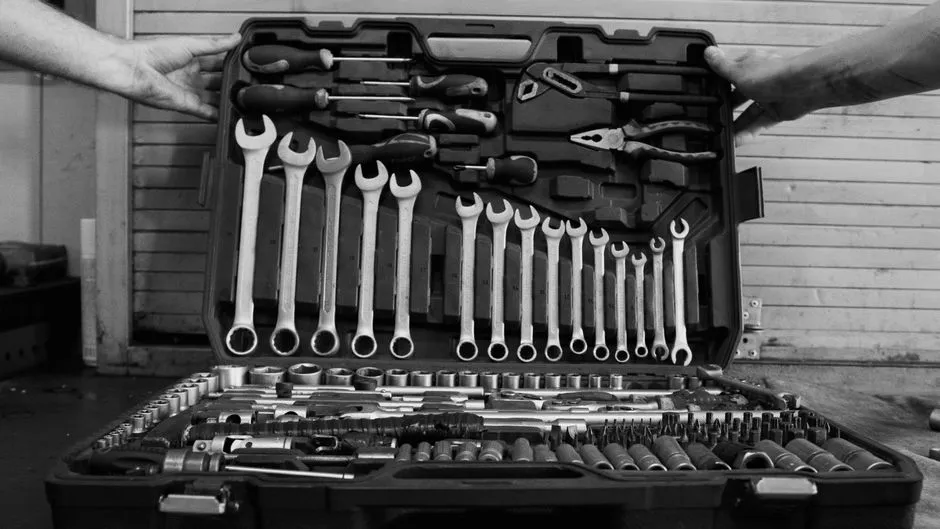
A torque wrench applies a specified turning moment
A torque wrench helps tighten a fastener to a documented specification under stated conditions. It does not determine whether the specification is correct, repair damaged threads, measure clamp load directly, or make an incorrect sequence safe. Find the exact service instruction first, then use a suitable calibrated tool within its rated range.
Read the specification conditions
Confirm units, fastener identity, new-versus-reused requirement, dry or lubricated thread condition, washers, sealant, tightening sequence, stages, and whether the procedure uses torque plus angle. The torque-spec guide explains why one number without conditions is incomplete.
Never apply oil or anti-seize unless the procedure specifies it. Lubrication changes friction and can increase clamp load at the same indicated torque.
Select the right wrench
Choose a wrench whose working range comfortably contains the target and whose drive matches properly rated sockets. Verify calibration status, direction capability, units, scale increments, and manufacturer instructions. Some wrenches measure only in one direction.
Avoid using a large wrench at the extreme bottom of its range when a smaller appropriate tool offers better control.
Prepare the fastener
Inspect threads, mating surfaces, washers, holes, and seats. Replace one-time or damaged fasteners as directed. Start threads by hand for several turns to prevent cross-threading. Run the fastener to the procedure's starting condition with ordinary tools.
A torque wrench is a finishing instrument, not a rescue device for rusty threads auditioning as rivets.
Set and hold it correctly
Set the target in the correct units and lock the adjustment. Fit the socket fully. Apply smooth, steady force at the handle position specified by the maker, generally perpendicular to the wrench body without jerking or bouncing.
Stop at the click, beep, light, or indicated value described by the tool instructions. Do not click repeatedly “to make sure”; each extra pull can add rotation and load.
Account for adapters
Extensions placed along the wrench's length can change effective leverage and require calculation; ninety-degree arrangements may not. Crowfoot orientation, universal joints, and long extensions can also affect access and reading. Follow the wrench and service guidance rather than applying a remembered internet formula to every geometry.
If the adapter calculation or access is uncertain, pause. Arithmetic performed while leaning over a fender is still arithmetic.
Use angle procedures separately
Torque-plus-angle instructions require the specified preliminary torque and then a measured additional rotation, often with an angle gauge or suitable electronic tool. Do not convert angle to a guessed higher torque. Replace torque-to-yield or other one-time fasteners when directed.
Protect calibration
Do not use a torque wrench to loosen fasteners unless its manufacturer allows that use. Avoid drops and overload. Store an adjustable click wrench at the maker's specified setting—often its minimum scale value, not below it—and have it calibrated at the stated interval or after suspected damage.
Basic tool selection and DIY preparation should happen first. Record the tool, setting, sequence, and result. Correct torque work feels uneventful. The wrench clicks once; nobody takes a victory lap; the fastener quietly continues its career.